Recently, I haven’t met anyone who doesn’t want to use their phone while traveling in Costa Rica. In this post, I’ll share how to use your cell phone most effectively in Costa Rica and compare the different ways to stay connected so you can decide what works best for your trip.
Quick Highlights
- WiFi is widely available in hotels, restaurants, and even parks.
- Costa Rica has near-total 4G coverage, with 5G in the Central Valley.
- Three options: US carrier international plan, physical SIM card, or an eSIM (I prefer eSIM).
- WhatsApp is the main way locals and businesses communicate.
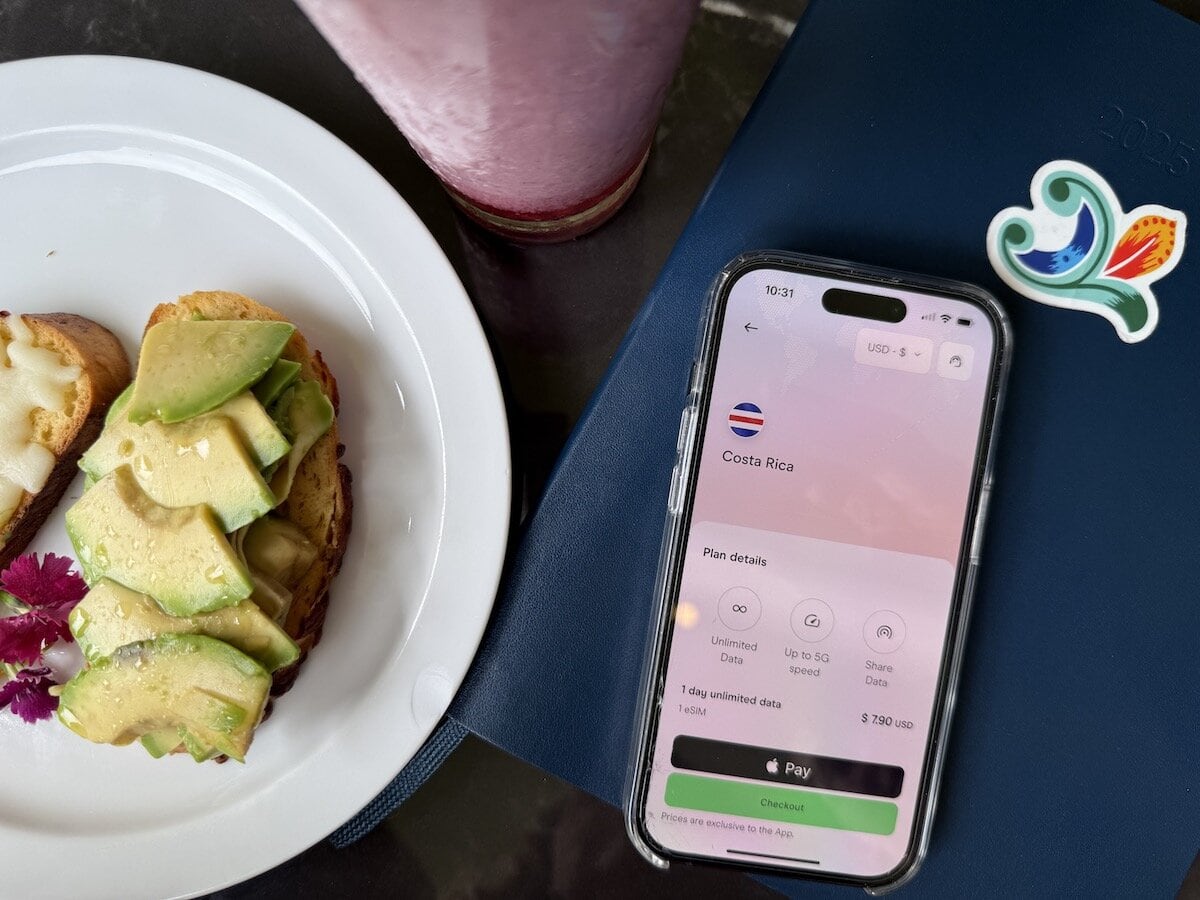
- Now that I’m using unlimited data in Costa Rica with Holafly, my trips have gone to the next level—it’s just easier to navigate, communicate, and enjoy the journey stress-free.
Cell Phones in Costa Rica
In Costa Rica, your cell phone isn’t just a convenience—it’s how life happens. Almost everyone has a smartphone, and because not as many people have computers, phones are used for almost everything. WhatsApp is the platform of choice for locals and businesses alike, from booking tours to checking in with your hotel or even ordering food.
One of the reasons I love WhatsApp is how quickly people respond—it’s so much faster than email. The best part is that you don’t need a local number to use it. As long as you have Wi-Fi or data, you can stay in touch with everyone, which also helps cut down on the amount of data you need to buy on your plan.
If you generally use a phone at home, you’ll want it in Costa Rica too. Don’t worry much about theft—just use the same caution you’d use anywhere when traveling abroad. You can also purchase cell phones in most towns, but expect to pay a premium due to high taxes on electronics. The good news is that monthly data plans are much cheaper than in the United States, which is also a real advantage for anyone moving to Costa Rica long-term.
RELATED POST: Costa Rica Safety Guide For Families
Do You Even Need a Data Plan in Costa Rica?
One of the biggest questions I hear from travelers is whether you actually need a data plan in Costa Rica—or if you can just rely on WiFi. The answer depends on how you plan to use your phone.
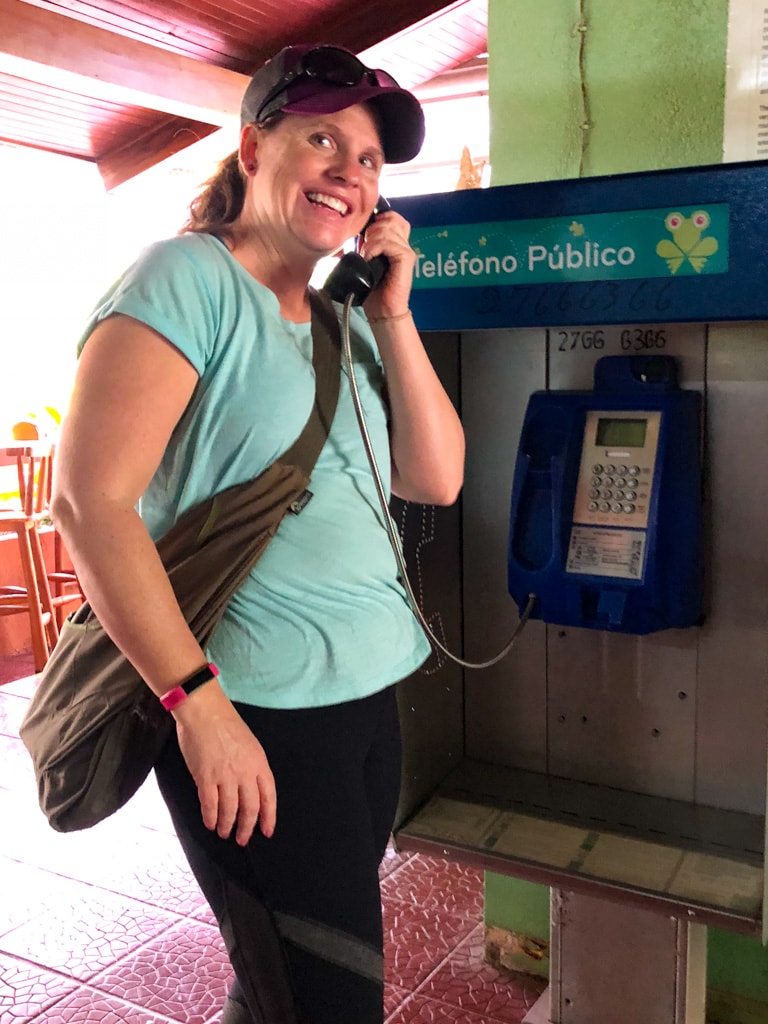
WiFi in Costa Rica: Free wireless is common in restaurants, cafes, hotels, and even public parks in bigger towns. If you contract a private shuttle, there’s a really good chance they have wifi. Ask for the password and connect easily. If you’re fine with only periodic access to the interwebs, you can put your phone in airplane mode and just use WiFi.
Navigation: The top question I get is about driving in Costa Rica. Offline maps on Google Maps and Waze work perfectly fine if you download your routes in advance. But if you’d rather have live updates and re-routing without the extra prep, it’s worth setting up your data before you leave.
[Button: Secure Your Discounted eSIM]
Cell service: Almost the whole country has 4G, with 5G near the capital. But some national parks, volcano areas, and deep rainforest zones have no signal. Sometimes WiFi is available when data isn’t.
Ask yourself:
- Will you need to communicate with locals?
- Will you feel safer using live data while driving a rental car?
- Do you need to accept calls and texts from home?
If your answer to any of these is “yes,” then you’ll want a plan. If not, you might be fine with just WiFi and offline tools.
How to Use Your Own Phone in Costa Rica
In Costa Rica, you have three main options if you want to use your own cell phone:
- Ask your local carrier to put you on an international plan and pay a daily fee to access data.
- Purchase a SIM card in Costa Rica and use pay-as-you-go.
- Install a virtual eSIM card and access local data.
For the second two options, your phone number would change while you are abroad. With a physical SIM card, your phone number would change and you may not have access to your home number until you switch back. With an eSIM, you can usually have more than one line active, which makes it easier to keep your regular number while also using Costa Rica data.
I’ve personally found that eSIMs are the easiest option for my family, but I’ll walk you through the pros and cons of each so you can decide what fits your trip best.
RELATED POST: Everything You Need To Know About Currency in Costa Rica
But first… a quick terminology clarification:
What is an eSIM?
If the term eSIM is new to you, here’s the simple version: it’s just a digital SIM card. Instead of buying a tiny plastic chip and swapping it out of your phone, you download the data plan right onto your device. Most newer phones even let you keep more than one line active at once. That means you can still get texts and calls from home while using a Costa Rica data plan—super handy if you don’t want to be completely unreachable.
Ok, so here’s the breakdown of your options, starting with a table overview if you prefer not to read everything:
| Option | Setup | Cost | Convenience | Keep US Number? | Best For |
|---|---|---|---|---|---|
| US Carrier Plan | Call carrier, activate daily pass ($10/day). | $10/day, adds up quickly; best for ≤5 days. | Easiest to set up but most expensive. | Yes | Short trips under 5 days, minimal hassle. |
| Costa Rican SIM Card | Buy SIM in Costa Rica, must have unlocked phone. | ~$10/week, cheapest option but less convenient. | Requires in-person purchase, ID, and sometimes Spanish. | No | Budget travelers comfortable with setup process. |
| eSIM (Holafly) | Buy online before trip, activate on arrival. | ~$25/week unlimited data, pay per trip length. | Instant setup, works immediately when you land. | Yes | Families, longer stays, travelers who want peace of mind. |
Option 1: Using Your Plan from Home
If you are planning to use your cell phone plan from home, you need to call your current cell phone provider and find out what international plans are available for Costa Rica. I will say that Costa Rica has a sort of convoluted phone system (run by the national electric company, the Instituto Costarricense de Electricidad, or ICE), and not all standard international plans apply to Costa Rica.
Make sure to call your cell phone carrier and find out the rates specific to Costa Rica (and ask about Costa Rica, don’t just assume that all international plans will work). Let your carrier know when you will be gone, and don’t forget to cancel when you get home so you aren’t paying for the plan unnecessarily.
In recent years, many of the large cell phone providers in the United States have made it easier to just do a daily rate—you pay for the days you use and you don’t pay for those you don’t. It is usually about $10/day.
Using your plan from home is the one I least recommend. It is definitely the easiest, but also the priciest, especially if you’re traveling with multiple phones. Costs can easily add up to $30 or $40 a day if you have multiple phones for your family.
Option 2: Buying a Physical SIM Card in Costa Rica
U.S. carriers often lock phones to their network, so you may need to request an unlock (which can take up to two weeks). Without an unlocked phone, you can’t use a Costa Rican SIM.
I almost always get my phone unlocked and buy a SIM card—data for a week usually costs under $10, much cheaper than a U.S. daily pass.
On my most recent trip, though, I tried to buy a physical SIM at the airport and it took a really long time to get it figured out. After all that, I discovered my phone didn’t even take a physical SIM. So definitely check before you leave if your phone even has a SIM card slot—many of the newer models don’t anymore.
Costa Rica Cell Phone Companies
- Kolbi: National brand; my personal pick to support Costa Rican products.
- Liberty: A Spanish company, very popular in Latin America.
- Claro: Former Verizon subsidiary, now owned by a Mexican telecom group.
All three offer similar coverage and prices, so just buy the one you can find most easily.
RELATED POST: Costa Rica With Kids- The Complete Guide
Where to Buy Physical SIM Cards in Costa Rica
- Airport: You will most likely find a Claro rep who can help you with a physical SIM or an eSIM. Last time I went, though, it took them almost 30 minutes to get my eSIM working, so I would just do the Holafly eSIM instead.
- Agency offices: For example, Kolbi at City Mall near San José airport. Staff will install the SIM for you, but expect about 30 minutes, and you’ll need your passport.
- Small shops: Look for carrier logos. The downside: you’ll need to activate the SIM yourself, usually in Spanish, and sometimes it requires a Costa Rican ID number.
Basically, even when everything goes right, buying a SIM in Costa Rica takes extra time and energy that you don’t always have on vacation. However, if your phone doesn’t have an eSIM option, this is your best bet.
Option 3: Using an eSIM in Costa Rica
Many new cell phones don’t even come with a slot for a physical SIM card anymore—new models are moving only to the eSIM format.
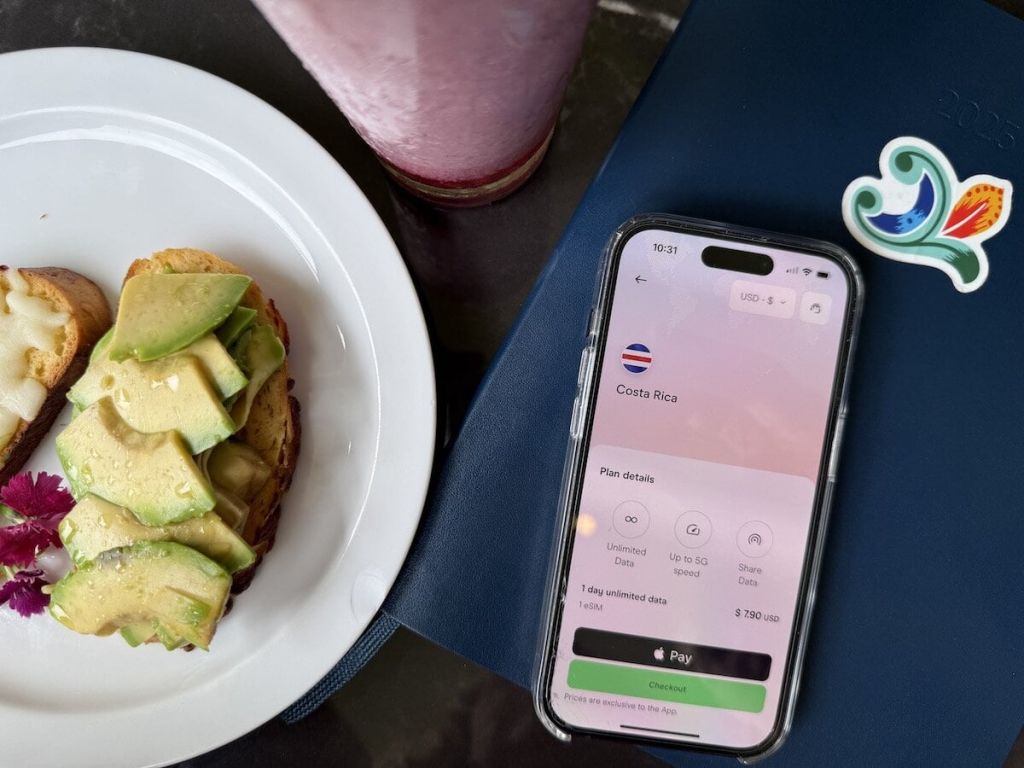
If your phone accepts an eSIM, this is by far the easiest way to stay connected in Costa Rica. Some carriers require your phone to be unlocked, so check that before you leave. While you can purchase eSIMs from Costa Rican carriers, activation can take a long time (it took me 30 minutes at the airport once). That’s why I always recommend buying online before you travel.
Of all the eSIM options I’ve tried, my favorite is Holafly. I pay for the number of days I’ll be gone, download the app before I leave, and then activate the plan right from the plane on the tarmac. By the time I step into the airport, I already have data.
The only downside to eSIMs is that you don’t get a Costa Rican phone number. But honestly, it’s not a problem since everyone in Costa Rica uses WhatsApp.
If you’d like the same peace of mind and instant connection when you land, it’s worth grabbing an eSIM before you go.
Final Thoughts & Discount
You can absolutely use your cell phone in Costa Rica—the only question is which option makes the most sense for your trip. U.S. plans are easy but pricey, physical SIMs are cheap but a hassle, and eSIMs strike the perfect balance.
That’s why I recommend Holafly. With unlimited data and instant activation, you’ll save time, save money, and avoid all the vacation headaches that come with figuring out cell service abroad.
Sponsored Post Disclosure
This post is sponsored by Holafly and contains affiliate links. If you purchase through these links, I may earn a small commission at no extra cost to you. Thank you for supporting Pura Vida Moms!
Pin it!