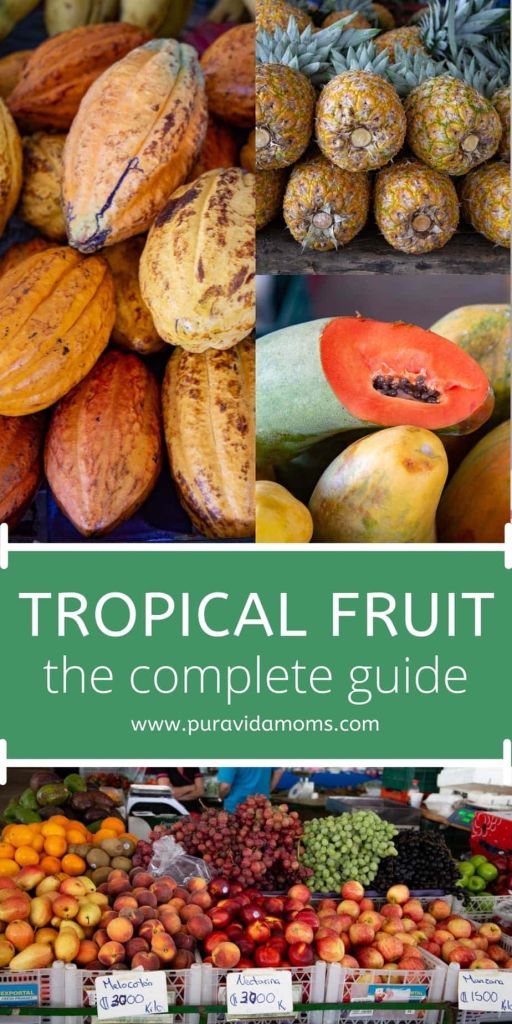
Costa Rica has so many different climates and altitudes, and that means an abundance of fruits and vegetables. From passion fruit and dragon fruit to bananas and strawberries, there are almost as many types of fruit in Costa Rica as there are places to visit. (Ok, maybe not quite that much!)
Eating out as many unknown fruits as possible can be a tasty challenge when you visit Costa Rica. While some are best eaten raw and fresh off the tree (such as mangosteen), others such as guayabas are best enjoyed in fruit smoothies.
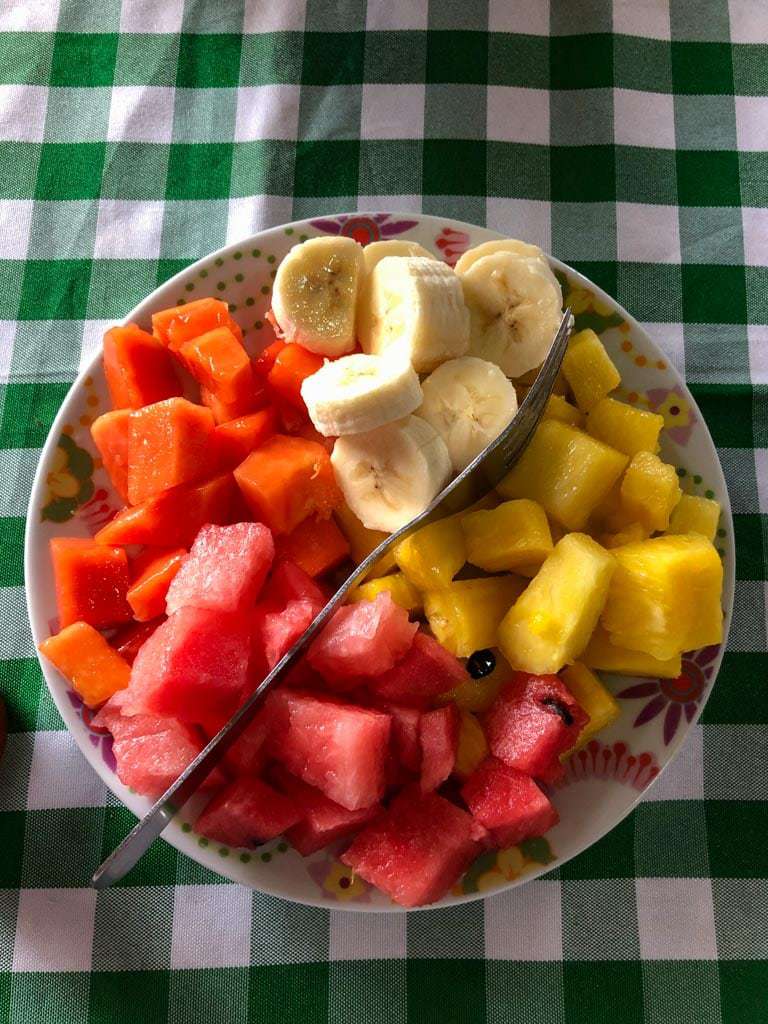
Costa Ricans enjoy fruit as snacks, in fruit smoothies and homemade juices, fruit plates almost always accompany a traditional Costa Rican breakfast or are served as a Costa Rican dessert. And don’t forget tropical fruit cocktails!
You can pretty much order a plato de frutas anywhere, and unlike many other Latin American countries, you can enjoy the fruit worry-free as the water is potable throughout all of Costa Rica.

Some people are concerned about pesticides with fresh produce in Costa Rica, and you can ask for organic produce. It is not always easy to find and costs more, but it is available throughout the country.
RELATED POST: Ultimate Guide To Costa Rica With Kids
Where To Buy Fruit In Costa Rica
Pulperías
Corner stores, also known as pulperías in Costa Rica offer the necessities and often also have some fruits and vegetables. The fresh produce generally depends on what is in season or what the owner could get that week. Prices here tend to be a little bit higher, but you are supporting a family business.
Grocery Stores
You can also find fruit in supermarkets. Again, the fruit here tends to be mostly what is in season or what the company could get for a good price. Grocery stores also tend to have a bit more expensive prices, but they do carry imported fruit as well. Plus the convenience of a one-stop shop can be worth the extra bill.
Farmer’s Markets
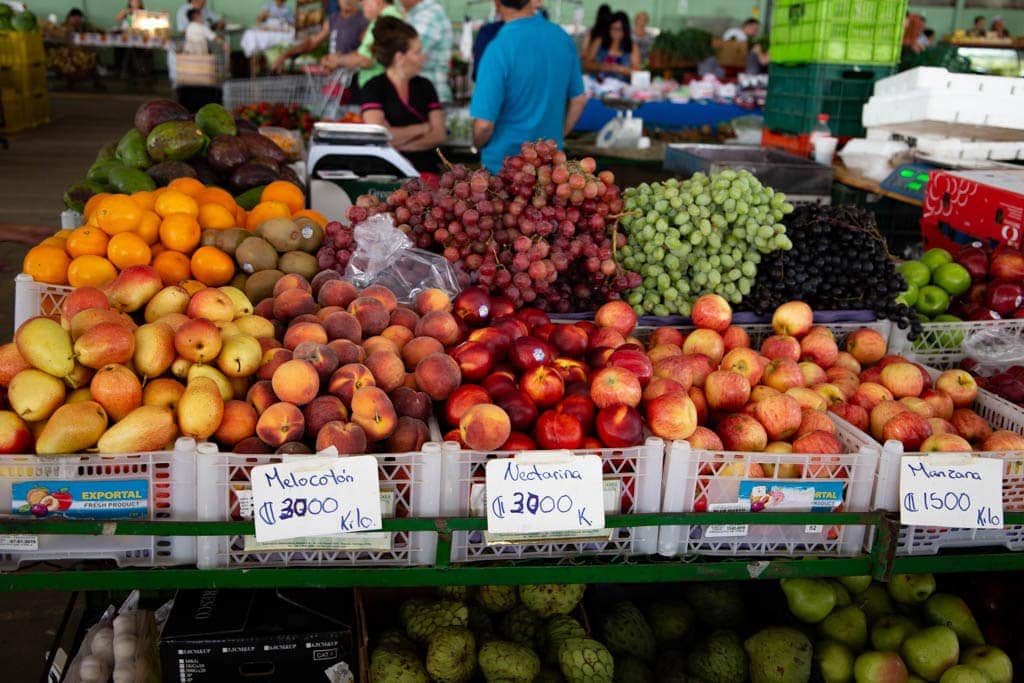
One of the best places to buy fruit in Costa Rica is farmer’s markets, which often offer a wider variety and some more exotic fruits than supermarkets. When you go to a farmer’s market in Costa Rica you are most likely buying the fruit directly from the source, which means prices are better and you are directly supporting a local farmer.
The downside is that farmer’s markets generally happen just one day a week in most places, so your trip to Costa Rica might not align with the market. You can find great markets in Jacó, Tamarindo, San José, and San Ramón.
Central Markets
Most towns have a central market. Tt’s usually indoors or partially indoors. There are generally stalls with fruits and vegetables alongside meat and cheese shops.
Roadside Stands
You will often see people selling produce on the street out of their truck or a little booth. These sellers often offer a few types of fruit which are mostly from the area and in season. They are a great way to have a healthy snack and keep the kids happy on long drives.
The fruit capital of Costa Rica is Atenas, which is on Ruta 27 out of San José towards the beaches of Jacó, Playa Mantas, Manuel Antonio, Uvita, etc. You will find tons of huge fruit stands along the highway- be sure to stop. You (and your kids!) will have a blast trying the fruit and it´s a great snack along the road.
Fruterías (Verdulerías)
In bigger towns, you will often find shops uniquely dedicated to selling fruits and sometimes vegetables.
They tend to have a wider variety of fruit than supermarkets and good prices, yet you will have less choice than in a farmer’s market. They also sell organic produce oftentimes.
List of Popular Costa Rican Fruits
Banana (banano)
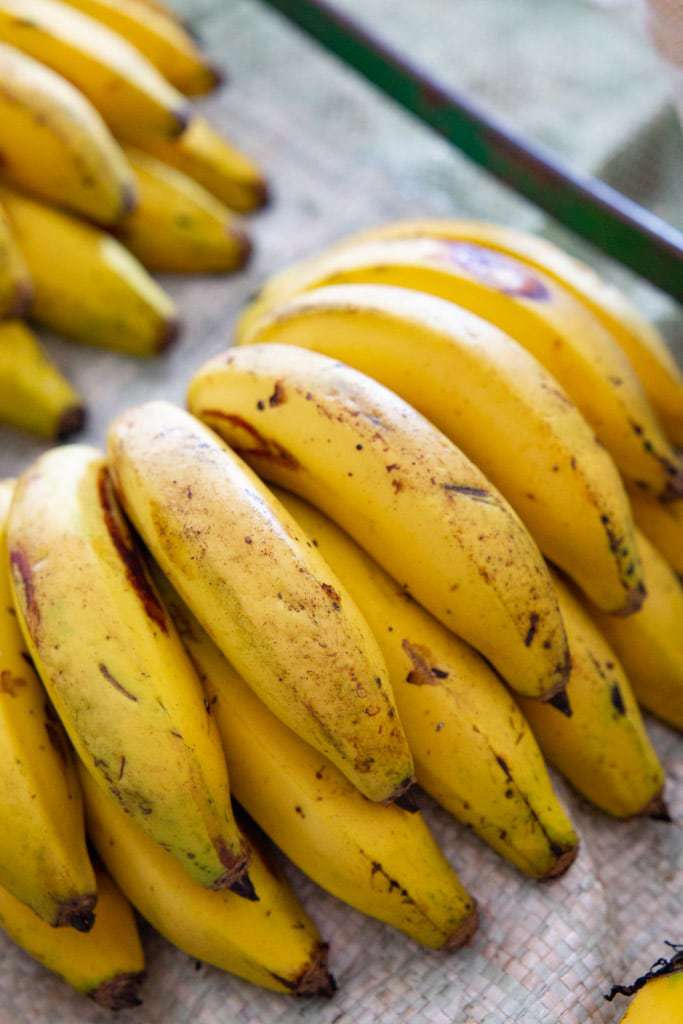
Bananas are plentiful in Costa Rica not only in quantity but also in varieties. Due to the longstanding presence of Dole, Chiquita and Del Monte on the Caribbean side of the country.
However, bananas grow everywhere- it’s not uncommon for a family to have a banana tree that they eat from.
Costa Ricans will often speak of export bananas which have a very different taste than native ones (banano criollo). We eat green bananas in dishes such as ceviche, and we eat the tiny ripened bananas as a snack, in fruit salads or in batidos (milkshakes).
You haven’t lived until you’ve eaten a perfectly ripened banana straight off the tree.
Plantains (Plátano)
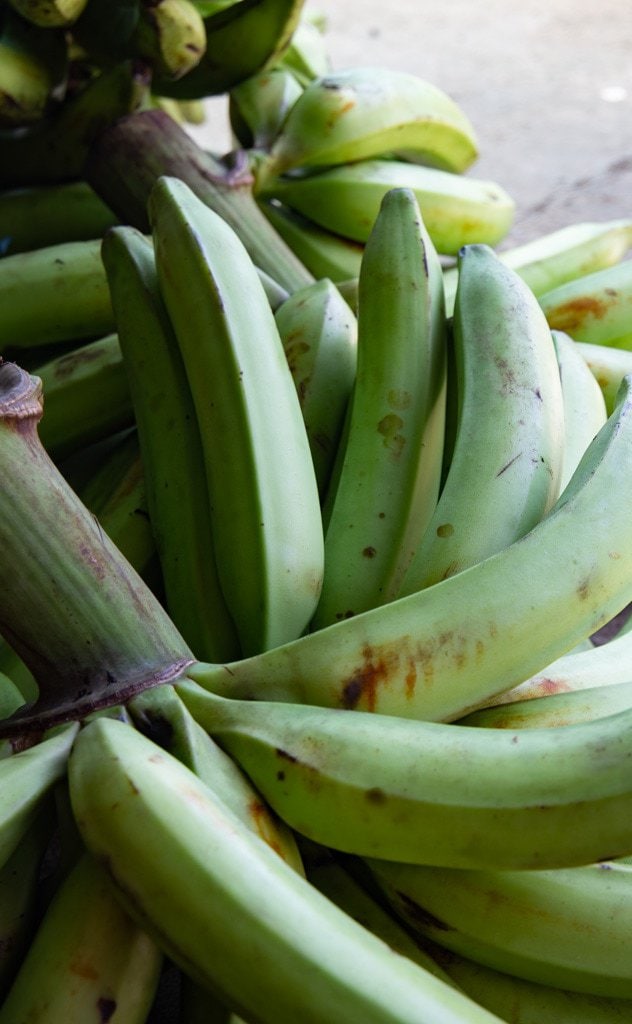
The banana’s first cousin is the plátano, and we eat them either green or ripened. Plantains have a starchier texture than the bananas, and they aren’t as sweet.
You can find ripened plantains fried up as accompanied by a traditional gallo pinto breakfast, or as part of the casado lunch.
We use boiled green plantains in the popular vigorón street food, and we also boil and smash them into patacones – like huge chips.
Pineapple (piña)
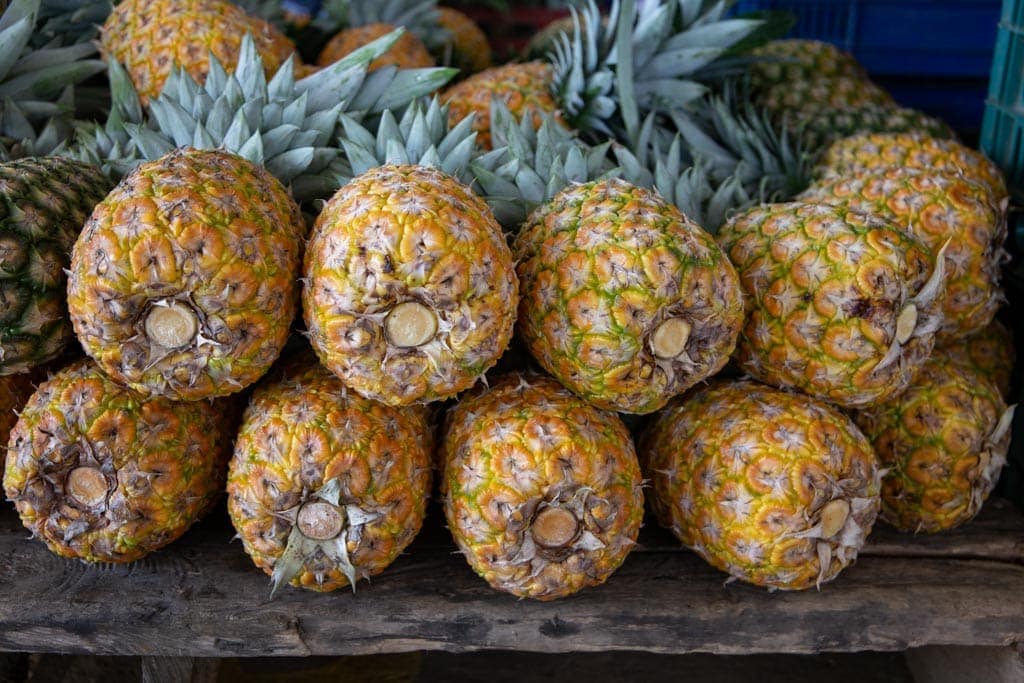
Pineapple… the deliciously sweet and refreshing yellow fruit is a favorite in Costa Rica and around the world. Piña is a national obsession, as is the piña colada cocktail made with fresh pineapple (not canned).
We love to make pineapple popsicles, pineapple ice cream, pineapple juice, pineapple smoothies, pineapple empanadas… you get the idea. Fun fact- my husband will not eat any other type of pineapple- not even Hawaiian.
Papaya (papaya)
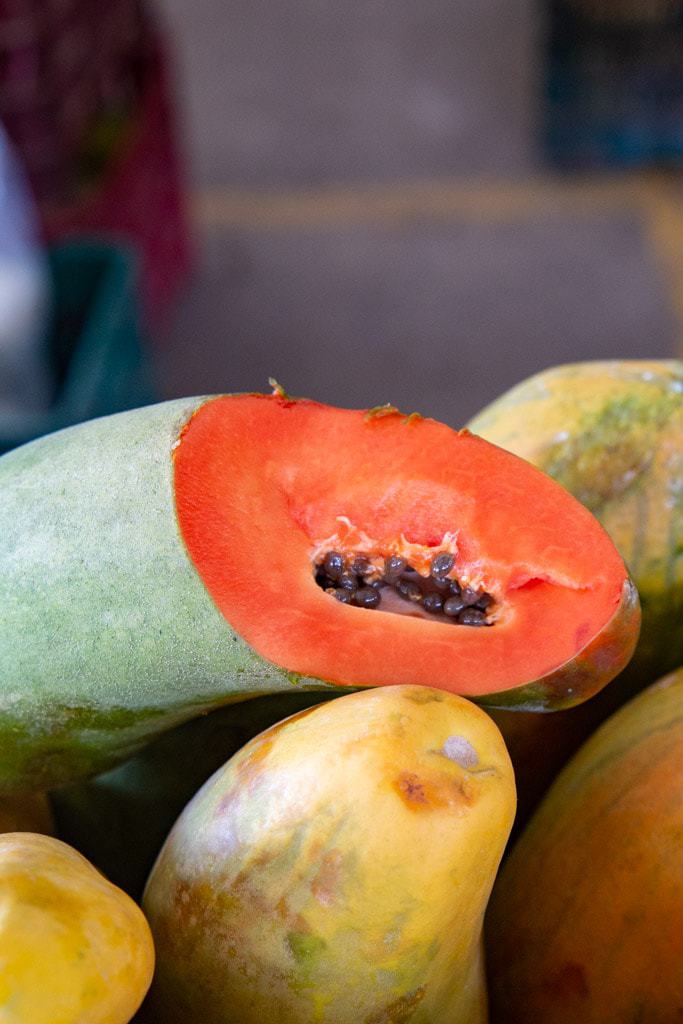
Another of Costa Rica’s staples, papaya ripens all year round. It is a sweet fruit that goes with almost everything and the peppery seeds can be dried and eaten, they have beneficial properties for health and digestion.
The papaya is eaten both green (like in a picadillo de papaya) and ripened as part of a fruit plate, in smoothies, and as fresh juice.
Another fun fact is that I think papaya tastes like poop (or what I imagine poop to taste like).
Peach Palm Fruit (pejibaye)
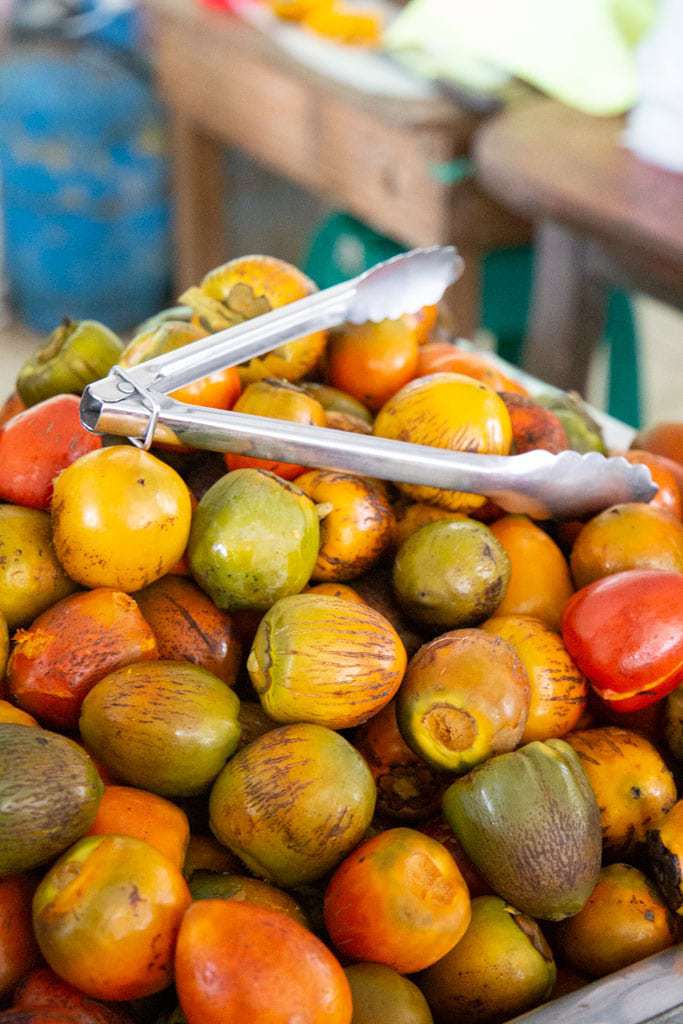
The pejibaye is very similar to a persimmon. It’s a savory fruit with a starchy texture. When you purchase it in Costa Rica, it’s often sold already boiled. Costa Ricans eat it with mayonnaise on top.
Mango (mango o manga)
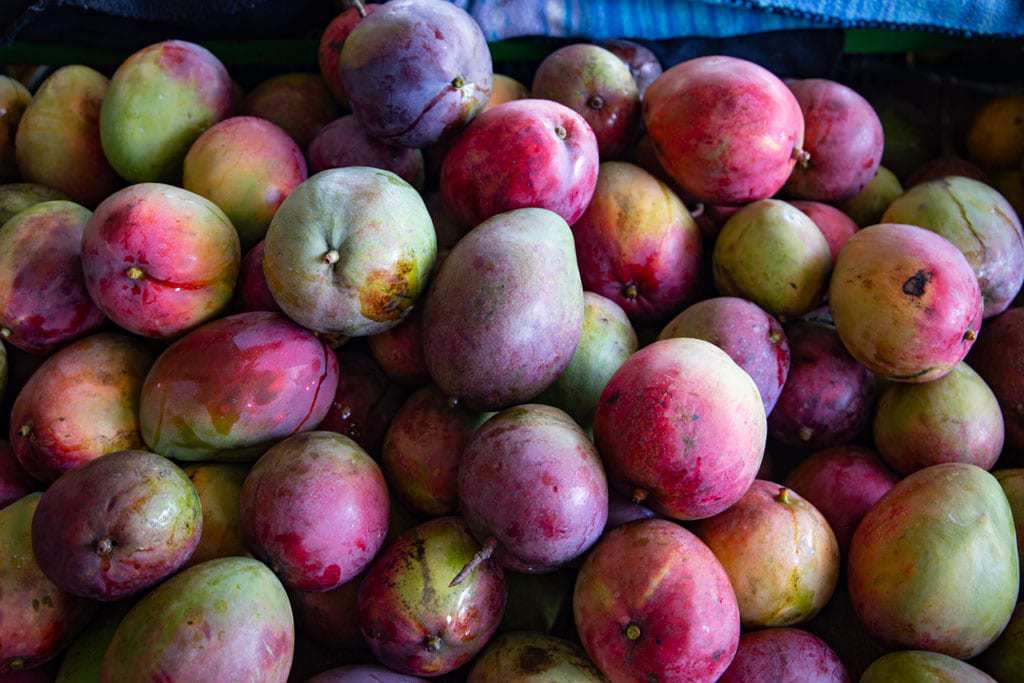
Mangos grow all over the country and are in season from March through June. Mango is another super popular fruit throughout Costa Rica.
Mangos are eaten in many ways: mangos are huge ripe fruits for making ice cream, mango popsicles, homemade mango juice, smoothies, and cocktails.
Mangas are the smaller sweet mangos that are used in the same way.
Mango sele or mango verde are eaten green with salt and lime. Street vendors often sell green mango slices in a plastic bag with a side of salt.
Nance (nance)
The small, orange fruits can be found along roadsides and in local shops. They are sometimes fermented into wine and are amazing eaten off of a tree.
Uchuva (goldenberry)
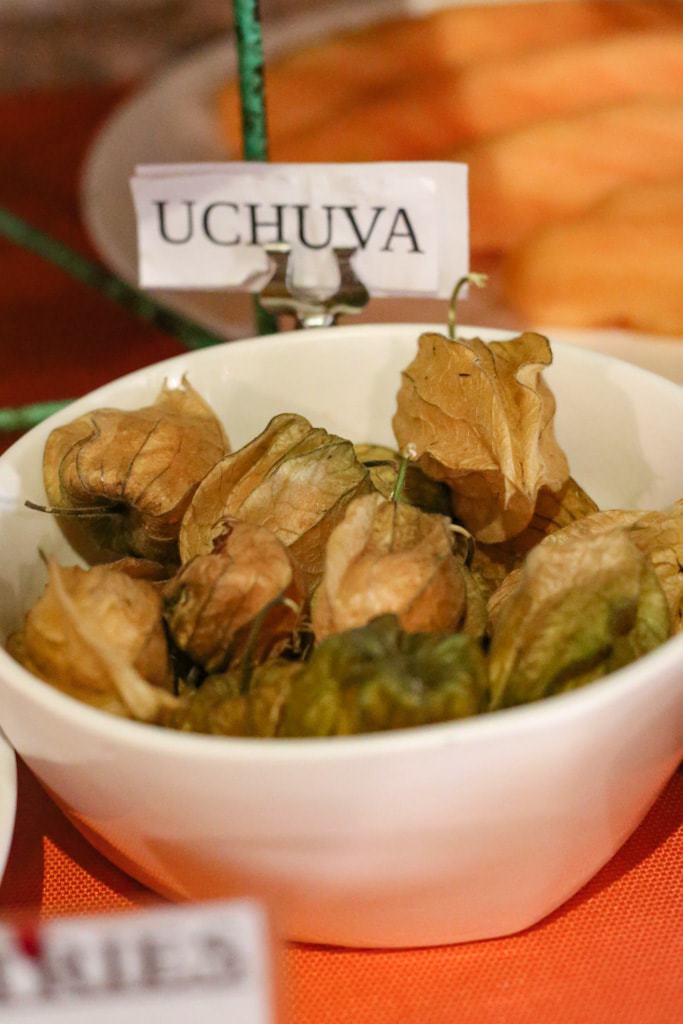
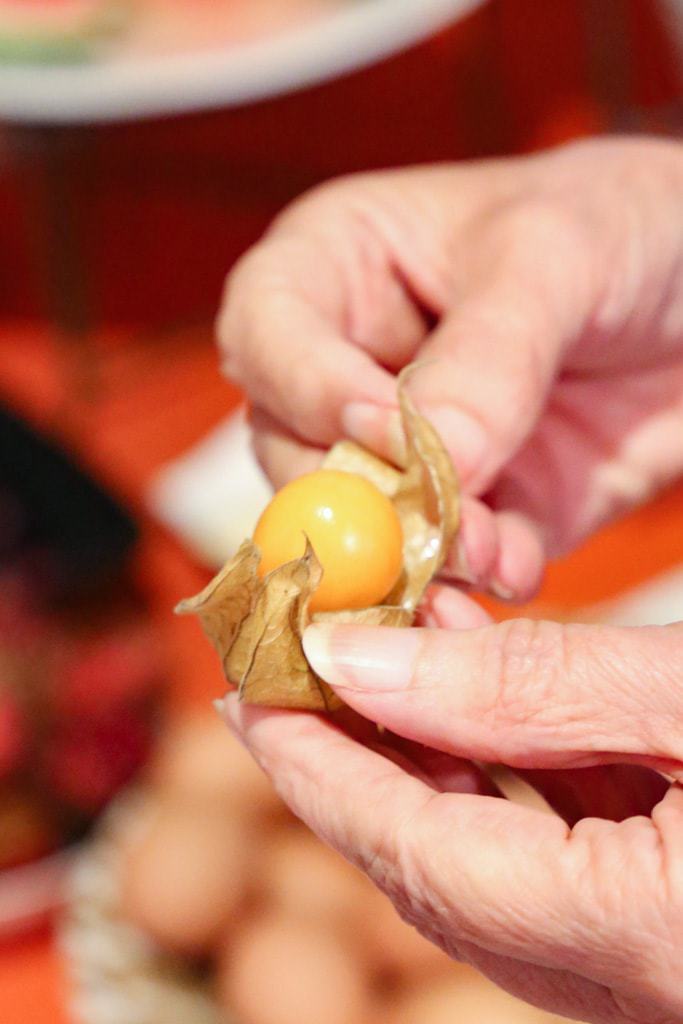
Goldenberries are found throughout the country and used for juices and just snacking. They are so similar to the nance that I often confuse the two.
Noni (noni)
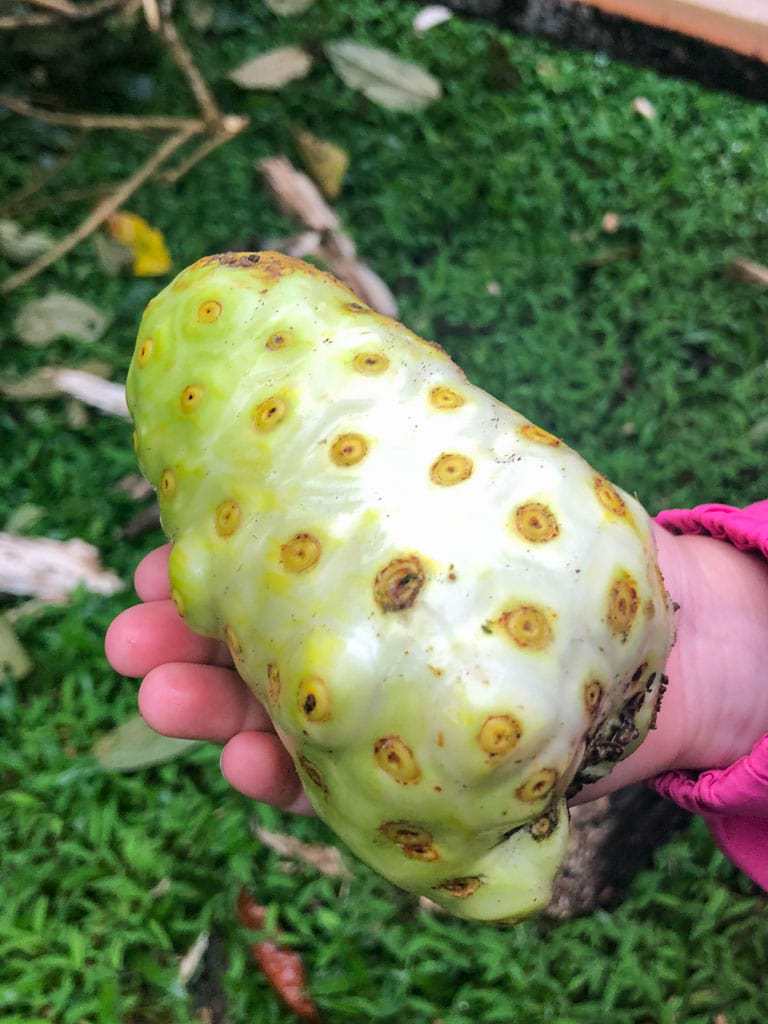
Some call it the cheese-fruit because of its particular smell. You will often see monkeys eat these abundant fruits along the Caribbean coast.
Noni is very medicinal, it has anti-cancer, anti-aging, skin-improving, and immune-enhancing properties. Not everyone likes noni, but it makes flavourful vinegar and adds an authentic blue cheese note to vegan cheeses.
Coconut (coco)
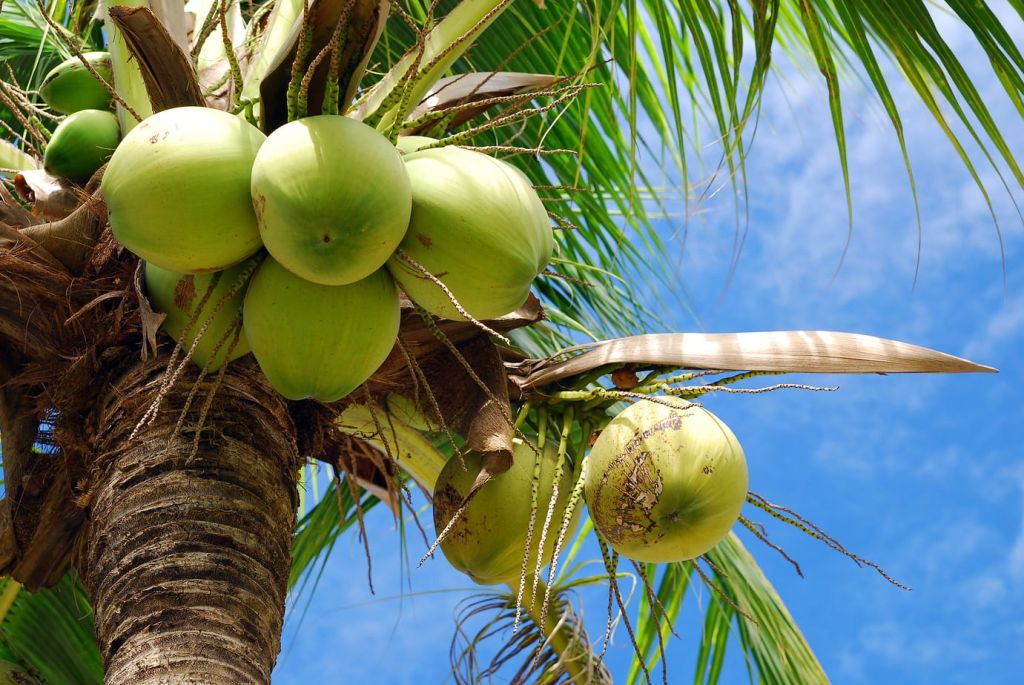
Eaten fresh, dried, in cakes, coconut milk, or drunken as coconut water, these fruits are abundant along the coast every month of the year.
We use ripened coco for everything from homemade coconut pudding (miel de coco) to piña coladas, to coconut empanadas. Another famous Costa Rican dessert with coconut is cajeta.
In the Caribbean, coconut milk is used to make rice and beans, a popular modification of gallo pinto using coconut milk to cook the beans in place of regular water. And definitely try cooking your chicken breasts in coconut milk to make Caribbean chicken!
Agua de pipa is also popular throughout Costa Rica. You’ll find people selling yellow coconuts with the tops cut off and straws peeking out for people to drink the fresh coconut water.
Cashew (fruit) marañón
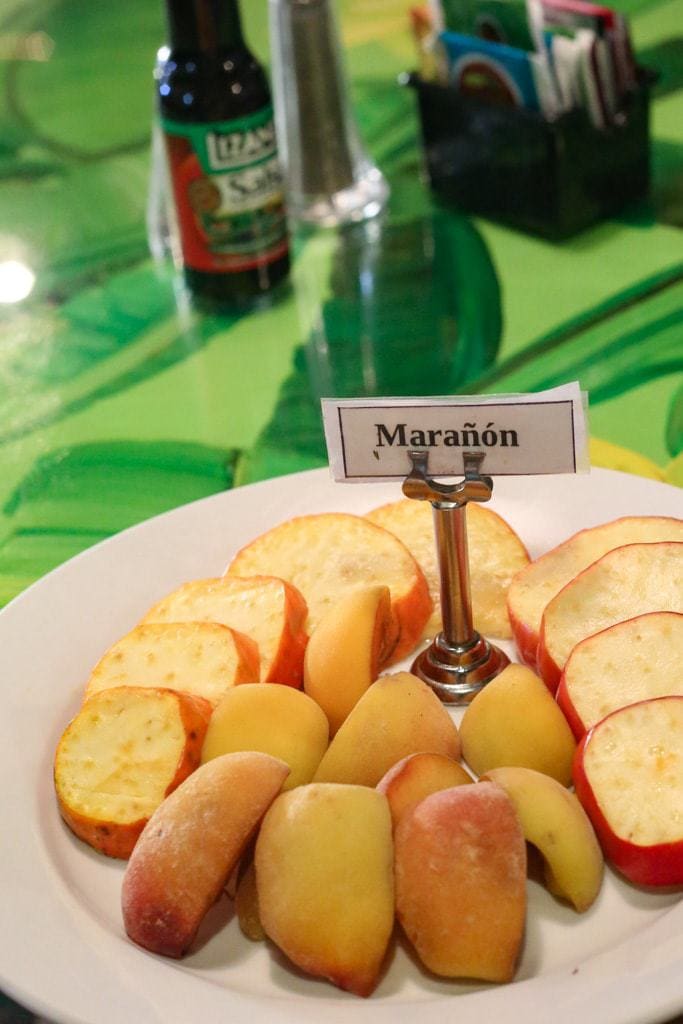
While the seed is highly toxic unless processed properly, cashew fruits (known as marañón in Costa Rica,) are a sweet delight and highly prized by locals in the Caribbean. They ripen in April.
Please note- if you have a tree nut allergy in the family these fruits can be harmful. And ticos generally don’t think of these as nuts when you identify a tree nut allergy- so please be aware and careful.
Waterapple (manzana de agua)
Another fruit that ripens in waves all year round is the water apple or manzana de agua. Since they grow on huge trees packed with fruit, they are locally abundant.
The best fruits have red coloring and are crunchy. They are wonderfully refreshing and make a juice that resembles normal apple juice.
Starfruit (carambola)
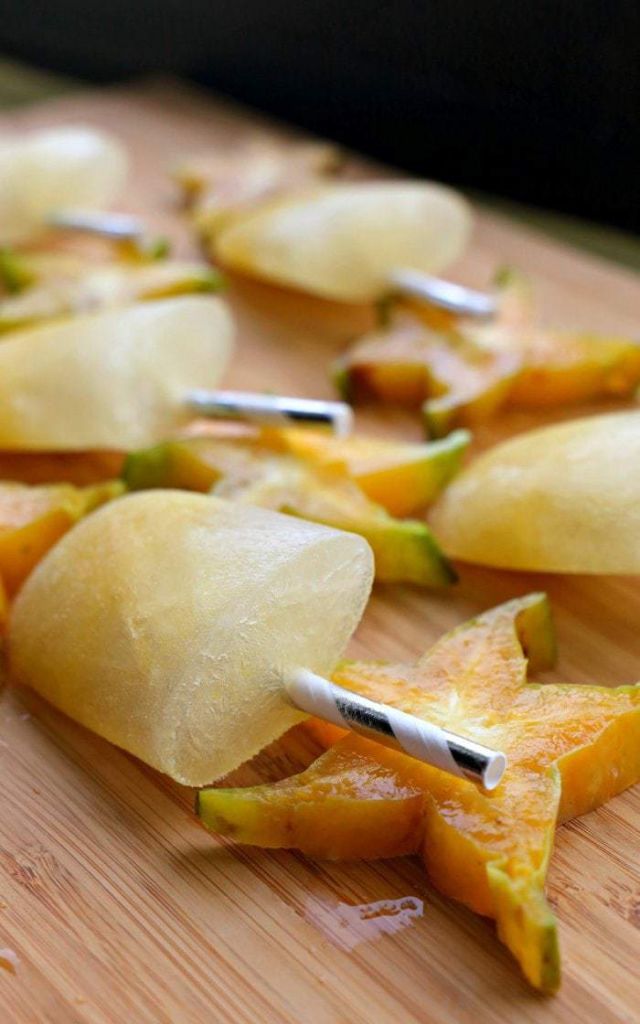
Star fruit or is a sour fruit, that is green to yellow, star-shaped, and great in salads, homemade juices, gelatto, popsicles and more. The more yellow the fruit is, the more ripe it is.
Mamón
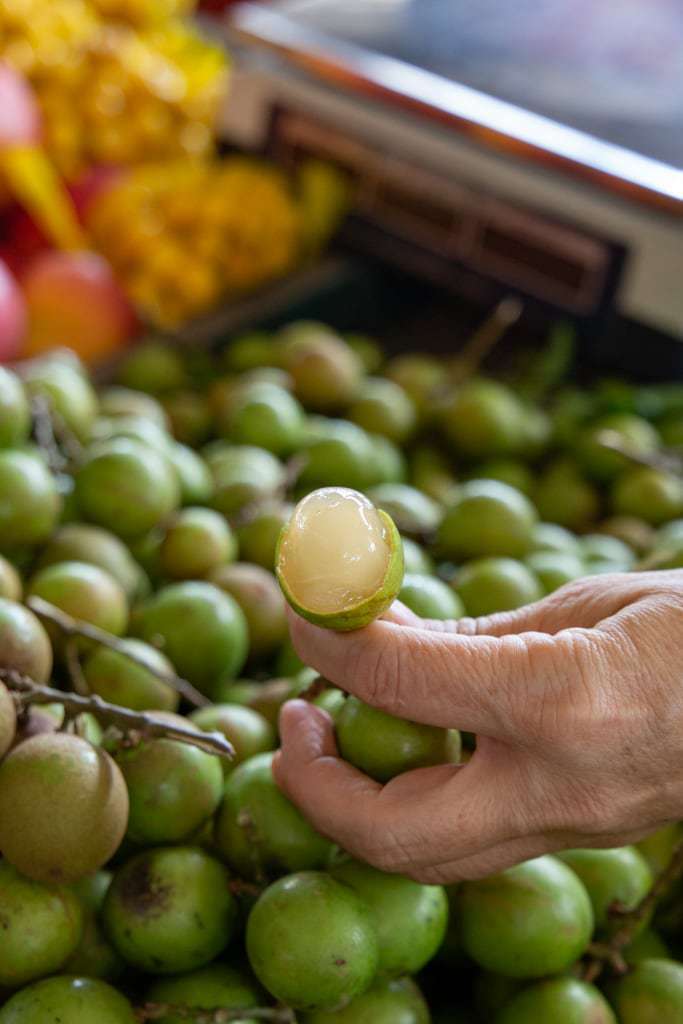
This is a gooey and sweet fruit that can be broken open and eaten or used for juices and frozen treats. If anyone knows what this fruit is called in English, please message me immediately!
Lychee or Rambutan (mamón chino)
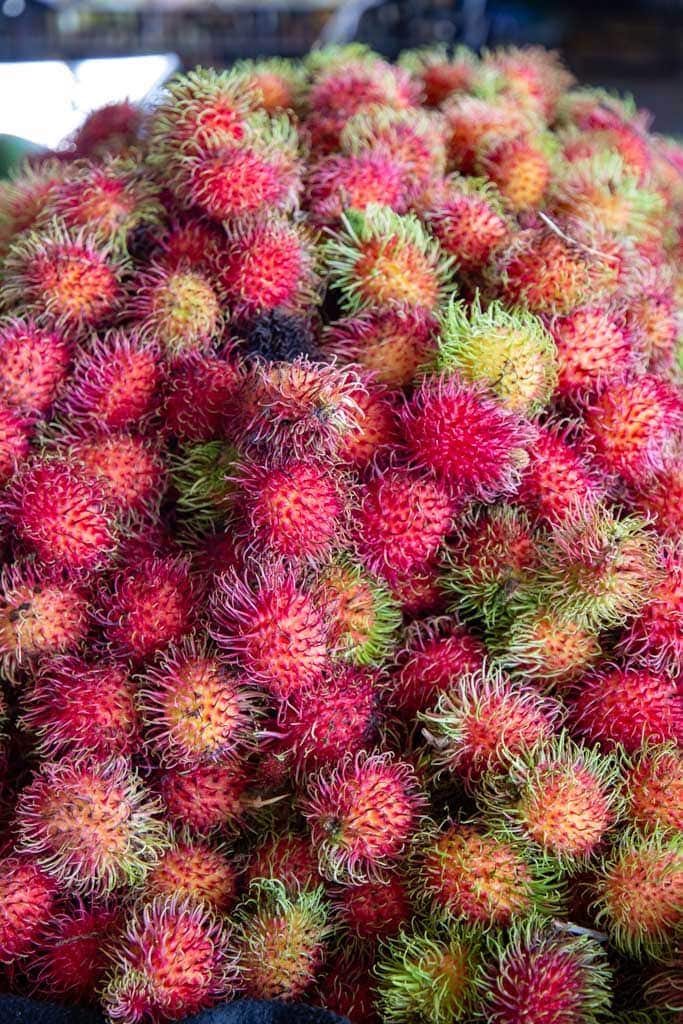
This spiky, hairy, red fruit is super popular with tourists as it is not readily available in the US. You have to open the fruit up and eat the inside, and it’s sweet and a bit gooey. Here’s a fun tutorial on how to eat a mamón chino.
Dragonfruit (pitaya)
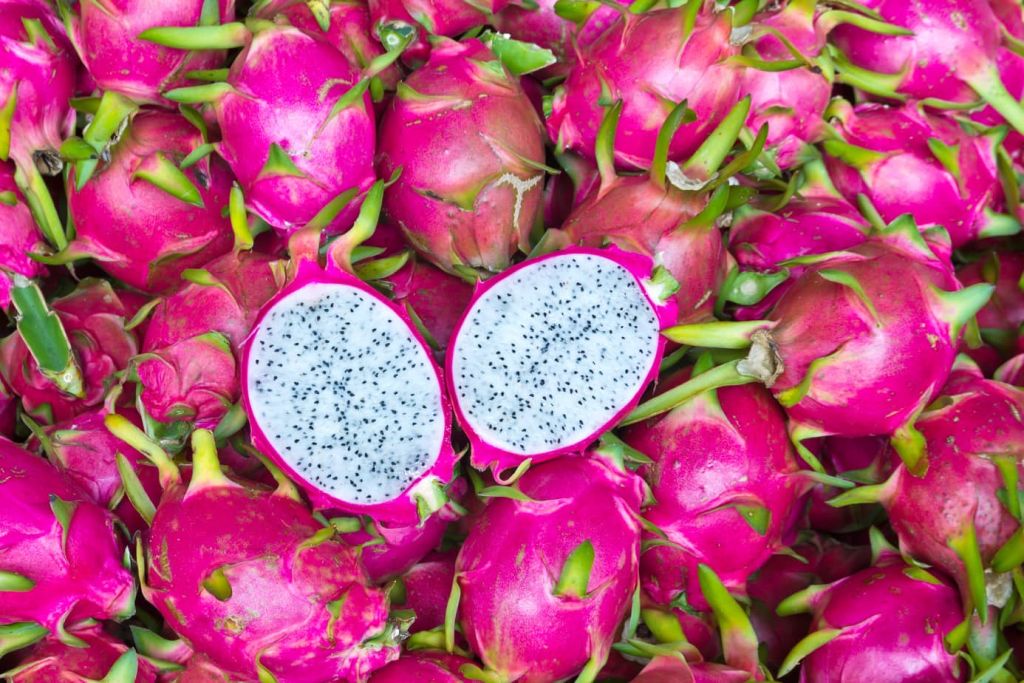
The dragon fruit originated in Southern Mexico and grows on a cactus. The shape of the plant makes it clear where its name stems from. In Costa Rica, it ripens mainly during the rainy season with its peak around October.
Dragon Fruit is not only beautiful but has also great health benefits such as toning the digestive tract. Since its flavor is rather subtle, a great way to eat the pulp is in smoothies and cocktails.
Cocoa Fruit (Cacao)
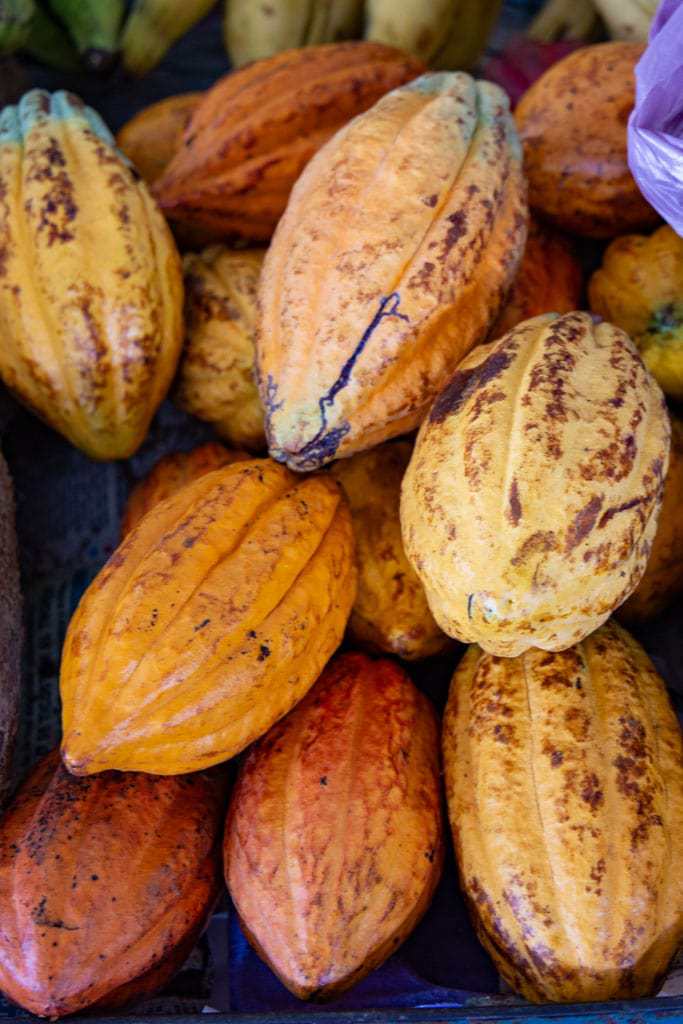
The delicious fruit is broken open and the pulp is used for everything from medicine to smoothies. And of course, we know what happens with the cocoa bean!
Passion fruit (maracuyá)
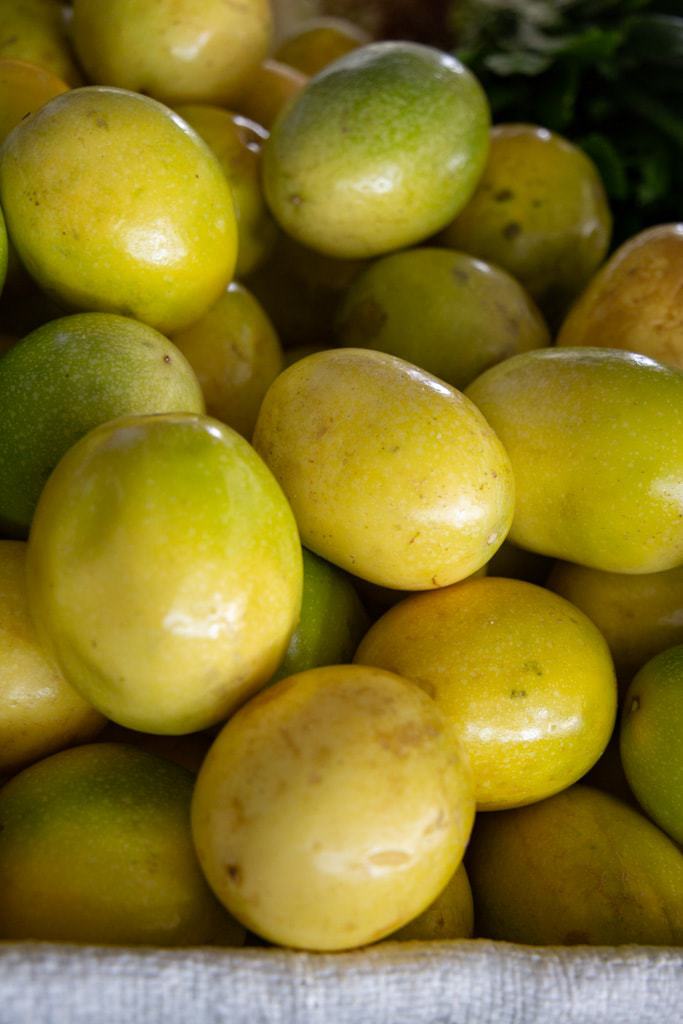
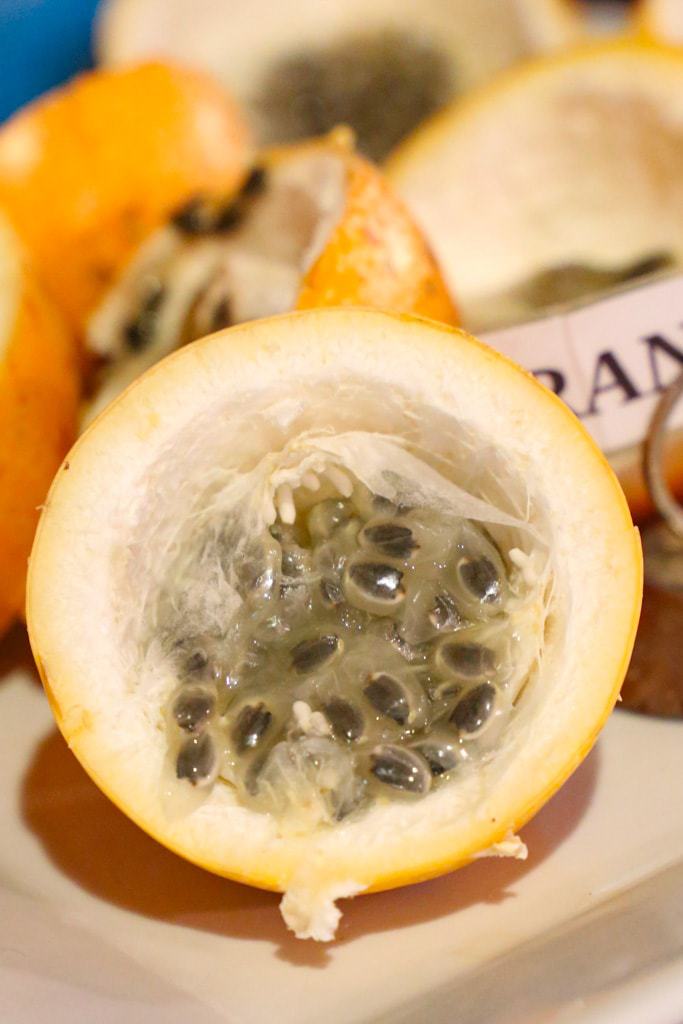
There are many different types of passifloras, plants of the passion flower family in Costa Rica. The Spanish word for passion fruit is maracuyá, but you can also find estococa, granadilla, or the giant elephant passion fruit, which is juiced with its flesh and all.
I love to make passion fruit juice for my kids in the summer. Packed with Vitamin C it also quenches thirst right away!
Guava (guayaba)
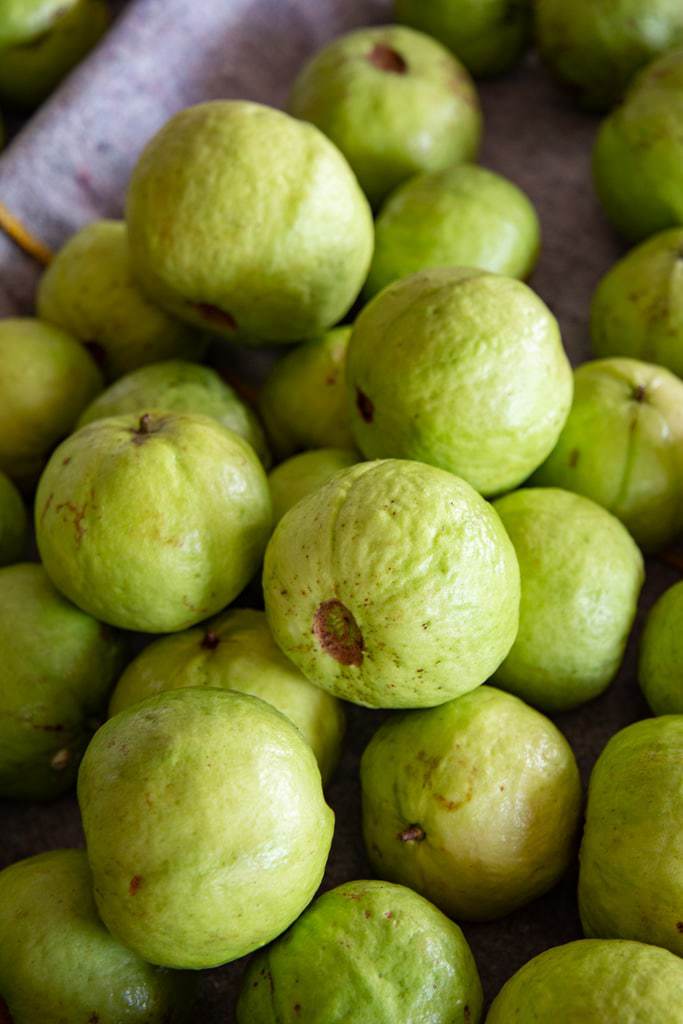
A typical fruit that is widely enjoyed throughout Costa Rica, this fruit is a gorgeous hue of pink inside. The Costa Rican guava season begins with the rainy season around June and ends in September. Guava is a very popular flavor in guava jelly, guava empanadas and guava candy.
Cas (No translation)
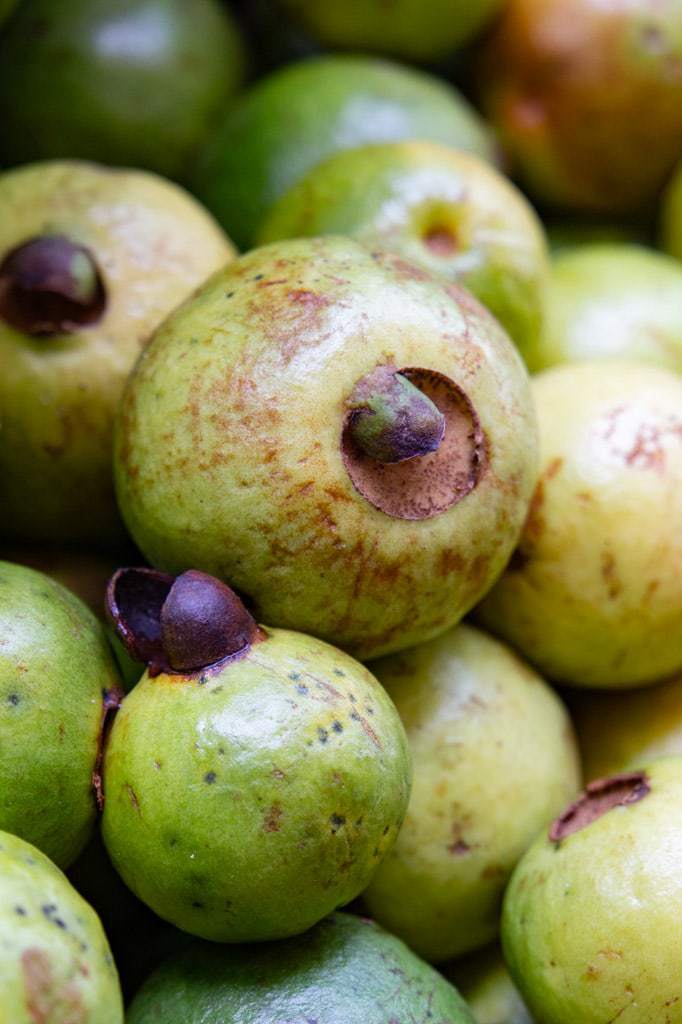
Cas is a first cousin to the guayaba- it’s practically the same except white inside instead of pink. It makes a dam good juice that’s a standard in most Costa Rican restaurants.
Apples, Peaches, Grapes
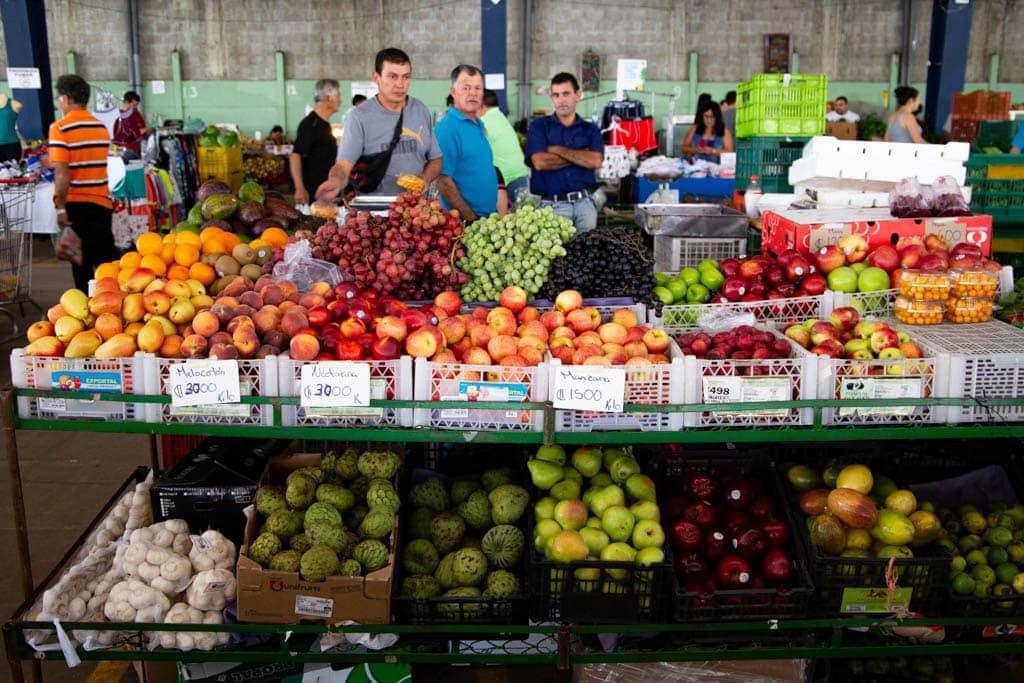
All of these temperate climate plants are grown in higher elevations around Dota and the Cerro de la Muerte in Costa Rica. Most of the time when you find these fruits in the market they come from Mexico or Chile.
Strawberries
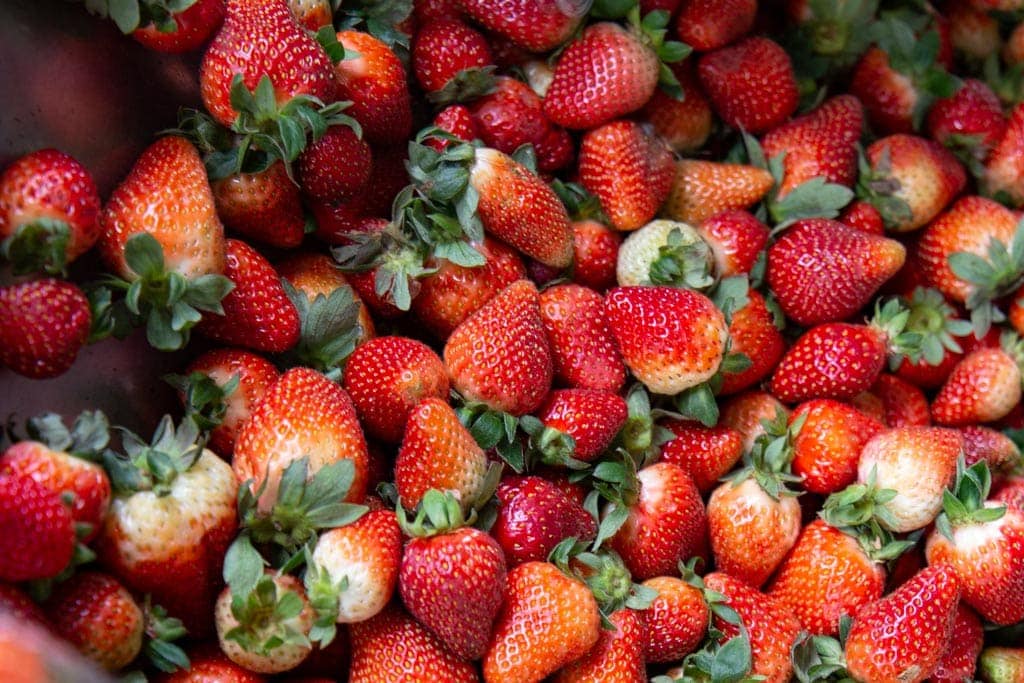
Around the Poás and Irazú volcanoes, you will find a ton of strawberry farms. We actually love to visit some of them (like Lechería Corso) and strawberry milkshakes are very popular in Costa Rica.
Personally, I do not think Costa Rican strawberries can even begin to rival California strawberries, but they do have a distinct taste and texture and they are very popular in Costa Rica.
Blackberries (mora)
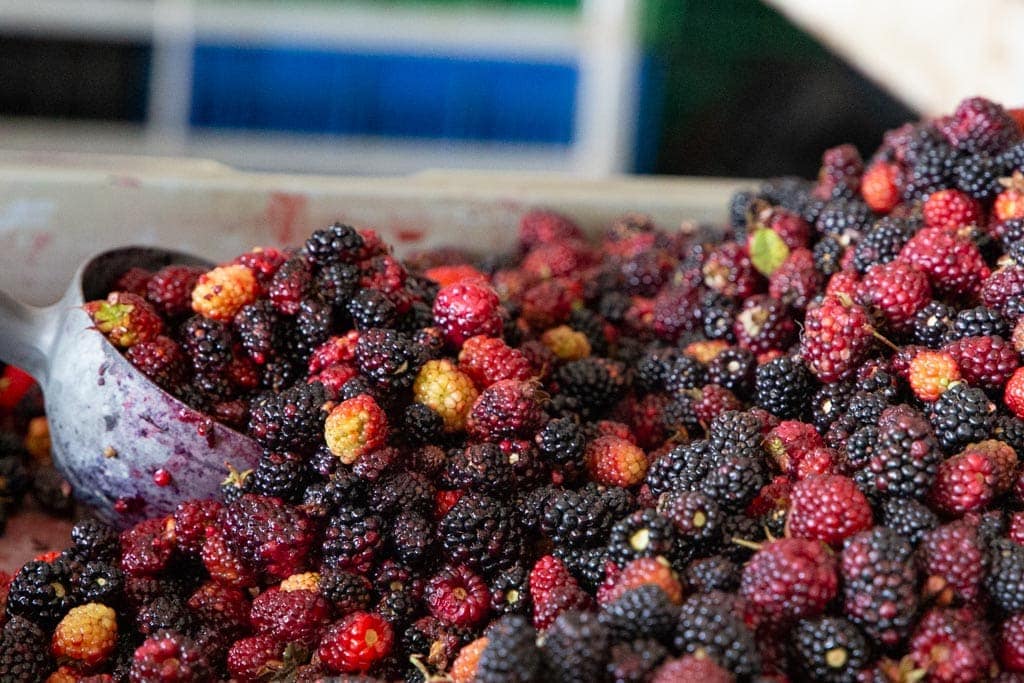
Blackberries are hugely popular in the Central Valley of Costa Rica. They are grown abundantly in the higher, cooler climates, and used in jams, ice cream, smoothies, and more. I am obsessed with Costa Rican blackberries- I think they are far superior to those found in the United States. Here are my favorite Costa Rican blackberry recipes:
Watermelon (sandía)
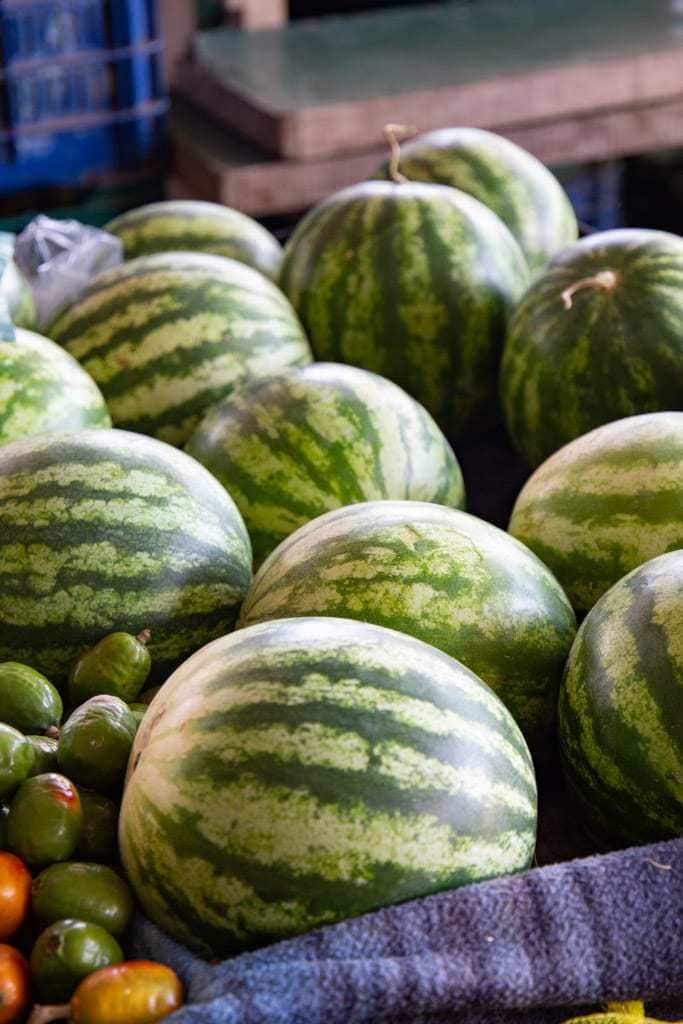
While not native to Costa Rica, watermelons are grown in Costa Rica and are very popular. They are generally huge and make a mean juice. Fresco de sandía is especially popular on the coasts.
Avocado (aguacate)
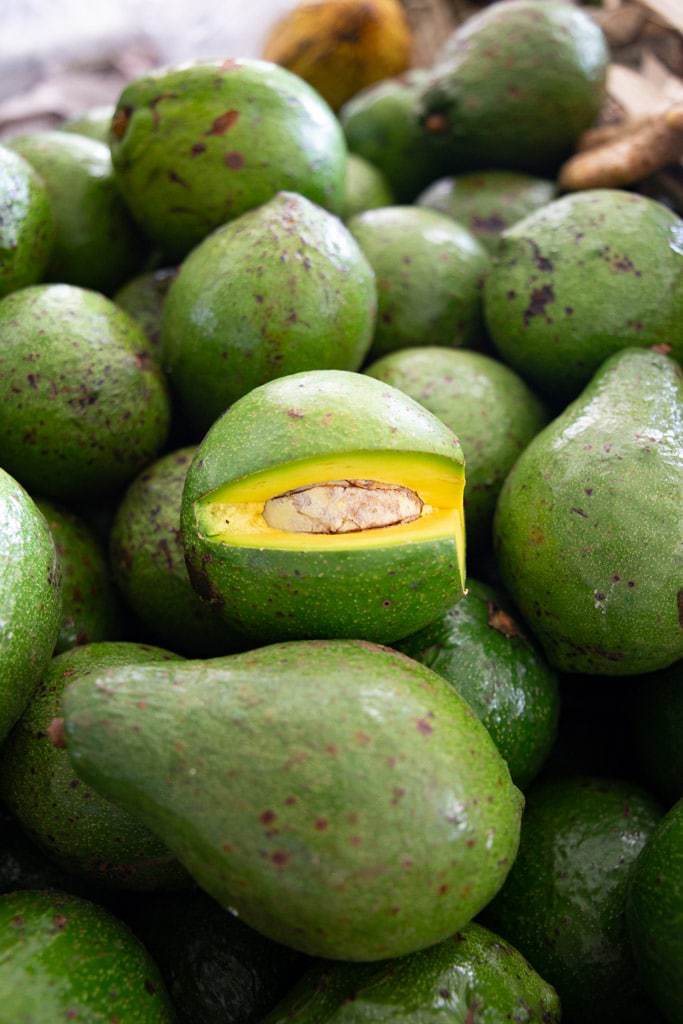
Although often eaten in savory meals, this fruit is also delicious in smoothies. You always eat it raw and it is served with tico classics such as gallo pinto and the casado lunch.
Costa Rican avocados are much bigger than their Mexican counterparts. The seed is a lighter color and the inside of the fruit is a brighter green. The taste is slightly different as well.
Related post: Homemade Guacamole Dip Recipe
Tamarindo (tamarindo)

This fruit grows on a tree in a hard-sided pod. You must remove the fruit and soak it before consuming it. It´s often used in tamarindo juice in Costa Rica.
Limes (limones)
If you want to open a can of worms just ask a tico the difference between a lemon and a lime. There are SO MANY versions of limes in Costa Rica.
There are the traditional limes as we have in the United States (limón mecino) and then there are some native limes that have a slightly different flavor (limón mandarina.) The limón mandarina is green on the outside but bright yellow on the inside, and is usually used in Costa Rican ceviche.
There are sweet limes too- limones dulces that are used for a refreshing lime juice.
One time I came home from the store with a bunch of regular limes and the chef made me go back out and buy all new limones mandarinas because he said the taste was completely different. It was hilarious because they looked exactly the same on the outside.
Oranges (naranjas)
If you think limes are confusing, well, get ready for oranges. Don’t call them anaranjados though- that’s the word for the color orange, not the fruit.
There are sour oranges used for drinks and cocktails, but those are NOT lemons or limes. (Note cynicism here.)
Naranjillas are sweet small oranges used for juice. You haven’t lived until you drink freshly squeezed Costa Rican orange juice- but that’s made from oranges that resemble those we eat in the States.
Zapote (Sapotilla Plum)
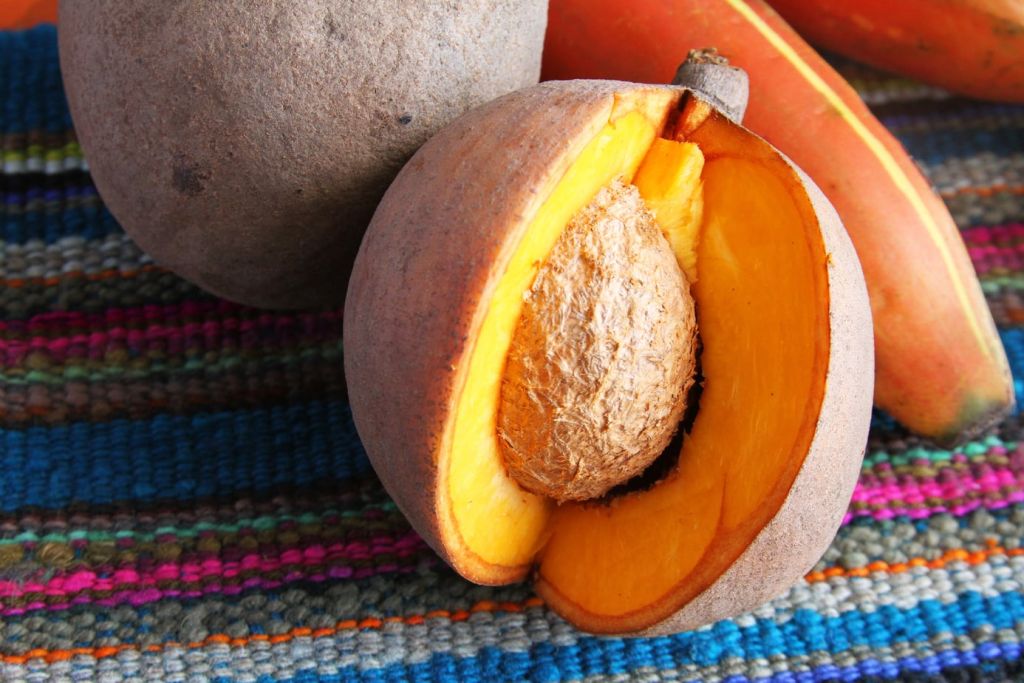
Endemic to Central America, zapote tastes like a mix between sweet potatoes and sugar cane. The creamy fruit in shades of orange, red, and black are in season between March and June.
We have a saying in Costa Rica “al mejor mono se le cae el zapote” which is a motivational phrase that means- even the best monkey drops his fruit sometimes.
Sour Sop (Guanábana)
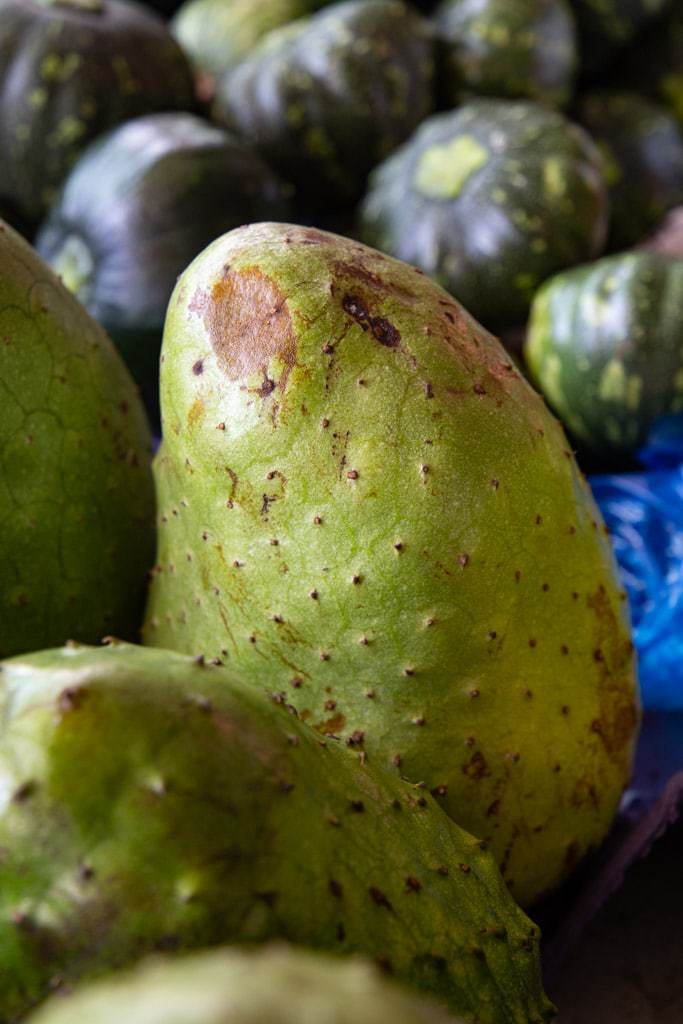
The big green fruit with sweet white flesh grows in the lowland tropics all year round. To eat, you need to take its black seeds out. In the Caribbean, it is used in folk medicine on an empty stomach to kill off parasites.
Fresco de guanábana is one of the most popular juices in the country, as is a sour sop smoothie and guanábana ice cream. It’s a flavor you can rarely find fresh in the United States so enjoy it in Costa Rica!
Milk fruit (caimito)
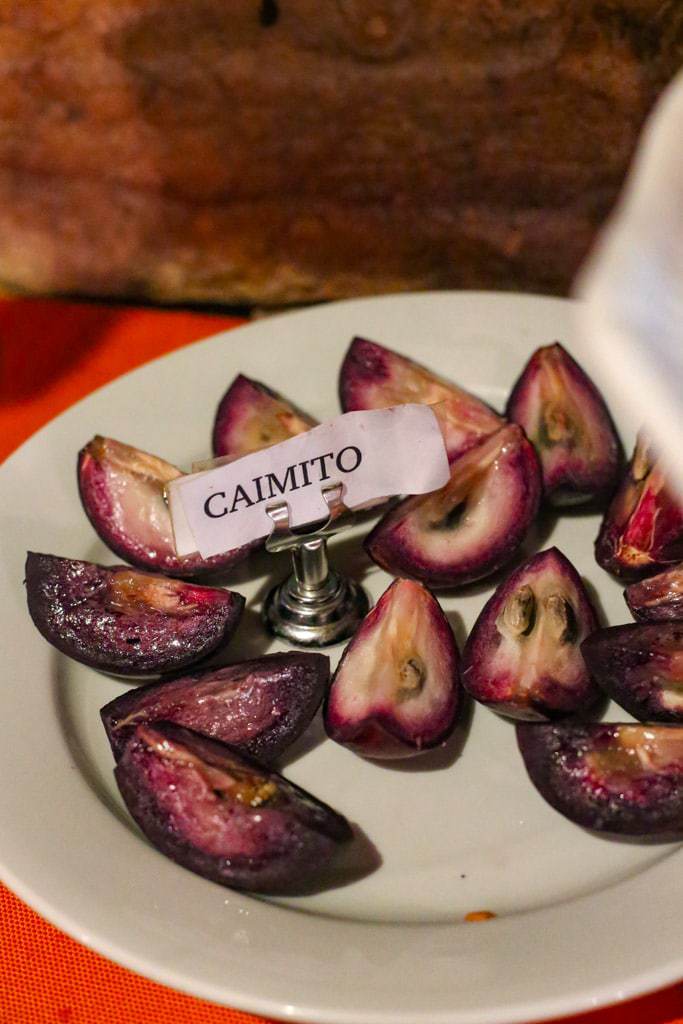
This dark little fruit is milky inside and is eaten as a snack. The name caimito is also used to describe a person’s skin color after they’ve gotten especially tan at the beach “se puso como un caimito“.
FAQ
What fruits are native to Costa Rica?
True Costa Rican fruits are cas, guava, and some types of avocados. Other fruit such as granadilla, dragonfruit, guanabana, nance, sapote, and papaya can be found all over Central America.
Is it safe to eat fruit in Costa Rica?
Yes. It is good practice, especially in the lowland tropics, to wash fruit with drinking water before eating.
What fruits grow in Costa Rica?
Both tropical and temperate fruits are grown in Costa Rica and can be found in markets all over the country.
Does jackfruit grow in Costa Rica?
Yes, jackfruit is grown in lower elevations, mainly in the Caribbean.
Don’t forget to pin it!